Showing posts with label faculty. Show all posts

Monday, February 22, 2021

Get To Know Your Department

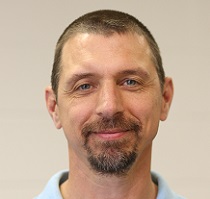
Get To Know Your Department: Michael Martin Edition 


Taken from Bloomsburg University Faculty Page
Credit to Bloomsburg University Faculty Page  

Of all the possible jobs he could end up in, Michael Martin never thought he would be a professor. For his undergraduate studies, he received his bachelors’ degree in History and Humanities from Dana College in Nebraska in 1983. After this, he was on track to become a parish pastor. But obviously, life had other plans. He left the clergy roster to go back to school and get his doctorate at Michigan Technological University in Houghton in Rhetoric and Technical Communication, which boasts one of the top five rhetoric programs in the country. He also received an invitation to do his Ph.D. in Theology at Princeton but turned it down. After earning his doctorate in 2003, he taught as an assistant professor of Technical Communication at the University of Wisconsin-Stout for six years, before receiving a job as an assistant professor and director of the Digital Rhetoric and Professional Writing Program in 2009. Dr. Michael Martin is now the full-time associate professor of Professional and Technical Writing Program in the English major here at Bloomsburg University.

While the good doctor is clearly accomplished academically, his passion for helping his students succeed is equal to his skill in rhetoric and writing. Dr. Martin strives to be there for every individual student that he has, no matter the issue. But during my interview with him, he told me that he had to grow into that role. He explained about the first teaching job he had at the University of Wisconsin being a huge learning curve for himself personally. He told me that through that job, he gained the understanding that being understanding and flexible towards students didn’t mean lowering his standards; it was merely finding the balance of challenging the student to develop their skills while being understanding of circumstances.

On an average day, you can find Dr. Martin juggling his classes, both upper level, and GEP classes, helping high school seniors create resumes and cover letters, advising his student advisees, and overseeing the English Department’s internships, all while making time for not just current students, but alumni as well. Dr. Martin expressed that, “We need to continue to cultivate our relationships with alumni, even after they’ve gone, so they know they’re not forgotten.” He makes a point of staying in contact with many of his former students and alumni as a testament to this belief.

As we finished our interview, I asked Dr. Martin about what he felt the biggest change was that came with teaching students fully online? He replied with this, “The biggest difference for us (educators) is to prepare them for the technologically advanced world that they are going into. We are trying to navigate it at the same time, so how do we prepare them for a world that has been turned upside down? We do so by equipping them with the skills needed to be successful at their jobs when they leave the academic and transition to into the professional.” This is what the English Department and Bloomsburg are all about; providing students with the knowledge needed to not only be successful but to inspire change in the world around them.     

Tuesday, November 5, 2019

Big Dog Reading Series: Jerry Wemple & Claire Lawrence

Don't forget to go to Monty's on Thursday and hear two of our own professors in the English Department, Prof. Jerry Wemple and Dr. Claire Lawrence, share their work. The event starts at 7 pm in Monty's Assembly Room on upper campus.


We can't wait to see you there!

Tuesday, October 29, 2019

COLA Symposium, English Alumni Panel Cover

Bloomsburg University’s 4th annual College of Liberal Arts Symposium was held just last week, inviting professors and alumni to speak and share their experiences and knowledge at various panels. One such panel featured five alumni of the English Department, providing life experience to English majors who are all going to be wondering the same thing upon graduation: what happens next?

From left: Steve Kotch, Lisa Regan, Jennifer Melzer, Seth Nolan, Keara Hozella


Keara Hozella (’14) is a Corporate Storyteller at SEKISUI SPI, a plastics manufacturing company in Bloomsburg. What does a corporate storyteller do? Hozella does all of the company writing, including social media, press releases, internal communications and editing. Whew.
Biggest piece of advice? Be involved at Bloom outside of classes. Hozella was a Gender Studies minor as well as an English major. SHe was also involved with the Voice (our student newspaper), the writing center (now WALES), and was gender studies work study student. All of these extracurricular activities helped her to gain skills that she uses in her job today.
Her interviews that she did with the Voice helped her to learn how to interview her coworkers and colleagues. Her English classes taught her how to write, write well, and edit well—and importantly, how to edit others without offending them.
Words of wisdom: “Your plan that you have right now might shift, but there are always ways for you to get to where you want to be.”

Steve Kotch (’10) is currently a copywriter at web.com, and is working on his teaching degree. He started out in the education track, but decided to go the full English major route when he found he wanted to write more. After completing his undergrad, he took a job at the call center of web.com, and after working there a little, noticed that they had copywriters and copyeditors. He applied for that position, and is now a copywriter, writing and editing copy and helping businesses move up the ranks in Google.
Words of wisdom: (on applications) “They want to see that you’re interested in the craft.”


Jennifer Melzer (06’) is a freelance author and editor. She’s been editing since right after she graduated, after hearing the advice from those around her saying that she had to focus to do something with her degree. Meltzer scoured the internet and created contacts that helped her build her client list and has been editing and writing fiction for the last 12-13 years.
The skills Meltzer uses most as an editor are her peer review skills she honed from her English classes, and how to give feedback without being hateful or hard. It all boils down to tact.
Words of wisdom: “I just started looking all over the place for places to write for, and through those opportunities I met other writers, and most of them were fiction writer or business writers and they needed an editor.”

Seth Nolan (’15) is currently a newspaper journalist at the Williamsport Sun Gazette, a “medium-to-small sized city with big city problems” that covers the news daily. Nolan has been a reporter there for three years, after a stint with the Press Enterprise, and is now an editor, in addition to helping with media and design.
Nolan learned how to be a diverse writer at Bloom. At the paper, he’s been required to cover all sorts of stories, from crime and court, to environmental issues, to whatever else they’d throw at him. It all requires him to be in a different headspace, and his experiences with English helped him to cover these stories.
Words of wisdom: “I was always more on the creative end, even though I was on the literature track. I realized I needed to get a portfolio together and got involved with the Voice. I started a little late, but it’s not too late to start building a portfolio . . . I’d got together a solid portfolio and send it to different editors, saying ‘this is my experience.’"


Lisa Regan (’02, ’05) currently is a full-time writer. Her titles have been on the USA Today and Wall Street Journal bestseller lists.
After first graduating from BloomU, Regan wasn’t sure of what she wanted to do, so she decided she wanted to get her PhD and become a professor. She came right back for her masters, and upon student teaching, realized that she didn’t share the same passion for teaching that her colleagues did. She finished her masters and went to Philadelphia to start working on writing, becoming a paralegal to pay the rent. She worked for thirteen years as a paralegal before she could start writing full time. She currently has eleven titles published, with her twelfth coming out in December.
There are three skills she gained as an English major that helped her with both her paralegal work and her writing, she says, and will carry over to any field. The first is critical thinking. The second, attention to detail. And the third, spelling and grammar.
Words of wisdom: “NOBODY uses critical thinking in the real world. I was a very highly paid paralegal. I was a plaintiff’s paralegal, which normally doesn’t pay much, but my boss valued my critical thinking skills so highly that I made twice as much as the others.”


While all of the alumni on the panel had great advice for the students in the crowd, one of the best pieces of advice came from Dr. Entzminger, the English Department head, while closing the panel: “Not everybody’s job is the right job.” None of these panelists started in the job the ended up in, and a few of them might move on to different jobs in the future, but the skills they learned as English majors with carry with them throughout their lives and help them in their careers.

Tuesday, October 8, 2019

Meet Our Professors: Prof Jerry Wemple


Where are you from?

I grew up in the nearby towns of Danville and Sunbury, but also spent part of my childhood in southwest Florida. As an adult, I have lived in several different parts of the US and visited about 12 countries. I left after high school and only came back to this area when I got a job at BU.

Where did you graduate from?

I have an MFA in English from the University of Massachusetts in Amherst.

What kinds of publications have you written for?

I have three published poetry collections and I co-edited a poetry anthology that was published by Penn State Press. My poetry and creative nonfiction have appeared in lots of journals and anthologies.

How long have you taught at Bloomsburg?

Twenty years.

What classes do you usually teach?

I teach a lot of different courses. I teach the poetry workshop and the nonfiction workshop, also The Practice of Creative Writing, which is a junior-year seminar for majors. I taught the poetry literature course, African American literature, and American Ethnic Lit. Of course, I also teach English 101.

Involved in any other organizations?

I am the director the Visual and Performing Arts Learning Community. That can be a lot of fun. Recently we went on a weekend field trip and were able to get a guided tour of the American Visionary Art Museum in Baltimore. There is some wild stuff in there.

What are your personal favorite kinds of books/shows?

I read a little bit of everything. I read poetry, of course, but I am interested in creative nonfiction and history, too. I am also always looking for new books to teach in class. For example, right now I am reading The Best We Could Do by Thi Bui. It is graphic memoir depicting an immigrant Vietnamese family. I may use in my American Ethnic Lit class in the spring.

If you could create your own class to teach, without restriction and about anything you want, what would it be?

One of the nice things about our English Department is that professors have a lot of academic freedom. I can shape my courses in a way that works for my students and me. I am kind of always teaching the course that I want, but I am always looking to keep it fresh. Even in English 101 I will not use the same books and approach more than a few semesters.

What is the best advice someone has ever given you about English?

In high school, one of my English teachers told me “good writing is good writing.” What he meant was to not limit oneself to a particular genre or style, but simply strive to be a good writer. When I worked for newspapers, I wrote sports, local news, and about crime. I was essentially a technical writer when I was in the Navy. Those types of writing definitely informed my creative writing. Working toward being a good writer in any genre will generally help your writing overall.

Quick, create a title of a book you’d like to write:

I just finished a new poetry collection. It is called “Ridge and Valley.” My poetry is often about place, and we are in the ridge and valley zone.

Now create the title of a book about you:

“Damn”

What would you like to see for the English department?  (Both short- and long-term)

In both the short-term and long-term I think the department needs to get the word out even more about the successes of our graduates. I’d like to see more students (and their parents) recognize what an English major can do for them. We have graduates from all of our tracks who go on to do amazing things and earn good salaries. However, too many people have a vocational mindset when it comes to higher education. If you want to be an accountant or a nurse, then by all means pursue those majors. But English teaches people to analyze diverse and often difficult literatures, research multiple sources, to synthesize, and to write effectively. In creative writing classes, we are always problem solving. For example, writing a sonnet is problematic: a sonnet should conform to a certain meter and rhyme scheme. It also has a rhetorical structure. The poet must set up and solve a problem in 14 lines, and do it in an inventive manner that appeals to readers. That is a lot of problem solving, and those skills lead to creative thinking. English majors who work hard during their college years are prepared to succeed and to adapt. Studies show that STEM grads generally start out with higher salaries, but liberal arts grads eventually catch up and surpass them.

(Hear some of Prof Wemple's and Dr. Lawrence's works at the next Big Dog Reading Series event!)

Tuesday, September 17, 2019

English Department Fall Cookout!

The English Department is having a Fall Cookout at Dr. Francis's backyard September 26th! Dr. Francis's house is an easy walk down the hill from main campus, and is sure to have lots of great (free!) food to eat, great people to meet, and cute dogs to pet.


Hope to see you there!

Wednesday, March 27, 2019

New Honors College at BloomU

July 1, the University will implement a new Honors College featuring small, discussion-focused classes and new opportunities for academic enrichment. Congratulations to Julie Vandivere, the current director of the Honors College and an English professor, who will continue to direct the new Honors College. Thank you for all your hard work in making this possible. The college will be located inside a new space in Lycoming Hall.

Friday, March 22, 2019

Reserve a Spot on the Husky Career Road Trip!

English majors in all tracks who are juniors and seniors should consider the Husky Career Road Trip sponsored by ProfessionalU to WebFX on Friday, April 12. The Harrisburg-based company is ranked as one of the top "Best Places to Work for Millennials" in the nation. WebFX (http://www.webpagefx.com) is a full-service internet marketing company offering innovative web marketing solutions to mid to large sized companies across the globe.

Megan Berbaum, a 2014 Bloomsburg graduate with a Creative Writing major and Professional Writing minor, has worked at WebFX since 2016. Megan says she really likes working there and encourages upcoming graduates to check out the company because they are hiring content creators. Megan would be happy to answer questions for any current Bloomsburg students about WebFX. Her email is mberbaum@webfx.com.

To find out more information, or to reserve a spot on the trip, follow this link to Handshake:
https://bloomu.joinhandshake.com/events/287377.

Monday, March 4, 2019

Meet Our Professors: Dr. Costanzo

Dr. Angelo Costanzo, Associate Professor of English


“My grandfather was a coal miner. He came to this country to work in the mines. He’s from Pittston. I grew up hearing about all these places, and to finally be here and doing research in them, it kind of feels like I’m meant to be here. Basically, I’m studying my grandfather. And that’s so cool.” 

Q. You studied linguistics during your undergraduate, what introduced you to this subject?
A. I’ve always been interested in languages. I got into linguistics through studying other languages; I studied Spanish for a really long time and a teacher suggested that I look into linguistics, as an undergraduate. When I started my undergraduate degree I was a major in Aerospace Engineering and I did not like that, so I went back to what I liked which was languages and linguistics.


Q. What has been your favorite course to teach so far?
A. I really like teaching History of English, because it’s the closest match up to what I’ve studied in the past. My background is mostly not in english, it’s in other languages, and I get to incorporate a lot of what I know of other languages in the History of English, because if you go back far enough a bunch of other languages used to all be one language. I also really enjoy teaching Structure of English, which I teach as kind of an introductory linguistics class.


Q. What brought you to BloomU?
A. What’s interesting is that when my family came to America they settled in this region. I was raised in Southern California, but I ended up coming back to where my family originally was from, which is kind of cool, it’s kind of come full circle. I like the area; I like Northeastern Pennsylvania. I feel like I belong here, even though I grew up some place very different from here.


Q. What projects are you currently working on? 
A. I’m working on a bunch of stuff right now, what I really want to be focusing on is a study of linguistic variation in the coal region. I have a personal connection the coal region; I like to do research wherever I am, I think it’s important to engage the community with the research. So I’m looking forward to in the future doing a lot of research in the coal region. I also have projects I’m working on based off my dissertation, which is based on Romania. So I do a lot of study of Romanian, the verb system, which is pretty boring, but I’m really excited to finally work on the coal region.


Q. What do you do in your spare time?
A. I have three children, so most of my spare time is spent with them. I enjoy cooking; I watch basketball a lot. Yeah, mostly try to spend time with my children. Every year I try to go to the Linguistic Society of America conference.


Q. If you were sponsored to travel anywhere to study linguistics for an extended period of time, where would you choose to go?
A. My favorite place, the place I’m most interested in, that I’ve spent some time in the past is the Balkans. I would love to go back to places like Macedonia and Albania, and study linguistics there. That area of the world interests me a lot. The culture is really, really interesting. It’s such a mixture...I found that was fascinating. I was lucky enough to spend some time there already; I fell in love with the area.


Q. What is your favorite thing about teaching at Bloom?
A. I think the students are great. The students are interested, they’re enthusiastic, they’re willing to mess around with language. A lot of learning linguistics is messing around, doing puzzles. I found the students here are willing to try.


Q. Do you have any visions for the linguistics program at Bloom?
A.  I want there to be more collaboration with other departments. The linguistics minor is already a collaboration between our department and Speech Pathology, I would love for there to be opportunities to make those connections stronger. I think co-teaching classes, these kinds of collaborations...We have so many interesting faculty doing so many interesting things.


Thank you to Dr. Costanzo for the interview!


Saturday, December 8, 2018

Faculty News: WLN Online Edition

We are happy to announce that our WALES Director, Dr. Roggenbuck, is a co-editor for the WLN Digital Edited Collection, a journal for Writing Center Scholarship.  This digital collection is aimed at making this content even more accessible for writing centers around the globe. 


Interested in learning more about WLN and its scholarship?  You can check out their website here


Wednesday, November 28, 2018

Meet Our Professors: Dr. Lawrence

Q: Where are you from?
C: I am from Salt Lake City, Utah.  Yeah - I’m a very western human.

Q: How did you end up in Bloomsburg?
C: So, the way that it works when you’re an English professor: the year that you get of out graduate school, you go to the MLA Conference.  A whole bunch of schools come to the MLA Conference and are looking for professors, and a whole bunch of people just out of graduate school go to that conference.  I had interviews with a lot of schools, but Bloomsburg and another one were the only two that offered me jobs -- and this was a better job.  One of the things I always tell people if they want to be professors [is that] you don’t have a choice of where you want to live in the country.  And that’s something that a lot of people are like, “Oh, you’re a professor, you’re here!” but, you know, there’s not that many jobs for English professors.

Q: Where did you graduate from?
C: [For my] undergrad, I went to Pomona College in Los Angeles, California.  For my Master’s Degree, I did a MFA in fiction from the University of Utah, and then I did my PhD at the University of Houston.

Q: What kinds of publications have you written for?
C: Well, really, my job is as a creative writer, so I don’t publish a lot of scholarly essays, but I do go to a lot of conferences where I talk about pedagogy, which is the study of teaching.  That’s where a lot of my scholarship is -- in terms of how to teach people things.  And then, in terms of publications, I think, like everyone working in creative writing, I have a super eclectic group of publications.  Like, I just got an essay published in an environmental journal out of Oxford University Press, which is kind of interesting.  But then, I also publish little short things online.  I was on this website called Lunchticket for this super short -- was it nonfiction or fiction?  Oh, it was fiction, it was a short story kind of thing.  So, pretty much the range.  I adore writing what is either like a short fiction or nonfiction piece or a prose poem, and the distinctions between the two of them [grow] very difficult.

Q: How long have you taught here at Bloomsburg?
C: This is my nineteenth year.  So, forever.  [laughs]  Seriously -- this was my first teaching job.  A lot of people move, but I stayed.  I think I liked a lot about the location, and I really liked our student body.  I felt like if I was teaching at some sort of super fancy private school, I would be teaching people who didn’t need me, you know, who already knew what I had to teach them, basically.  But here, I just feel like Bloomsburg is an absolute game changer for some people, and I love that.  I love being part of that.

Q:  What classes do you usually teach?
C: Well, I teach two sections of Freshmen Writing -- or First-year writing, I suppose, is what we call it now. I teach those, and sometimes I teach Honors and sometimes I don’t.  And then, I teach the range of creative writing classes except for poetry, because I am not a poetry expert.  But I could teach almost everything else.

Q: Are you involved in any organizations?
C: I am the advisor for HOPE, which is Help Our Planet and Earth.  It’s an environmental organization. I think that’s all that am an advisor for right now.  We had, on campus for a long time, a Green Campus Initiative, which I was the chair of, but it does less than it used to.  I’m a big environmentalist, in case you can’t tell.  It’s one of my passions.

Q: What are your favorite books, shows, or genres?
C: Really, what I absolutely adore is a particular genre, which is graphic novels. I am a huge fiend for graphic novels, and I teach a graphic novels class.  I teach a Lit and Society class that is graphic novel [oriented]. A lot of that is because I do visual art as well, and I really love the combination of art and words on the page.  I just -- I am in love with that.  I almost went to school for visual art, and my mom said that it wasn’t practical, which I thought was absolutely hilarious… so I went and got a history degree, and that’s wasn’t practical either!  It has nothing to do with what I’m doing now.  So ha.  [laughs] Take that, mom!

Q: If you could create a new class to teach, what would it be?
C: It’s definitely going to come off like my last question -- well, there’s two things, actually, that I would do.  The first would be a graphic novel class where we actually created a graphic novel, and so I would want to partner with somebody in Art -- like, over in Art, Sue O’Donnell, who does graphic design stuff?  I adore her; if our schedules ever allowed us to team-teach a class, to do something with graphic design or something that was like that, I would live to do that.

But, the other thing that I’m interested in which might be more realistic: I really, really love political fiction, and so I would love to teach a class -- and I don’t mean overt political fiction, but I would love to teach a class with ‘issues,’ you know, where the fiction is talking about issues.  So it could be something like a dystopian world that comments on our world, or it could be something that’s about a refugee experience or something like that.

Q: What is the best advice someone has ever given you about English?
C: I think this is advice that I give you guys [in class] often, especially when you’re all really stressed, but -- so I was really stressed about finishing my dissertation for my PhD, and my dissertation mentor said this thing: “How do you eat an elephant?”  And the answer is: “One bite at a time.” I think that a lot of people get a lot of anxiety when they’re starting a piece and that’s what keeps them from starting. Even for me, sometimes I’ll be like, “Ohmygosh I haven’t published anything in a while! I’m really stressed out; I have to write this!” And then I won’t even get started.  So, you write the first sentence. And then you write the second sentence.

Q: What would be the title of a book about you?
C:  The title of the book about me would be Best Dinner Ever.  The reason for that is that’s what my family says about me all the time, that I’m ridiculously excited by small things.  Like, my husband will make me -- like, he made this really good spicy shrimp thing with cucumbers and miso dressing and avocados, and it was crunchy, and I was sitting on the couch going, “It’s the best dinner ever!!”  And he says, “You say that for every dinner.” [laughs] And I think that’s kind of true of me, you know; I’m someone who’s really super happy with the small stuff, and I would love to somehow write a book about that, to show other people that all the huge political stuff that’s going on or all the stress you have about school or all the things going on with your families -- there’s a way to just be happy with the fact the little pockets of good things.  Like, I really like my blue scarf.  Or, like, this is the ring that I bought myself for being brave for going knocking on doors for the Democrats for the vote.  Just -- tiny little things like that.  I live on those.

Q: What would you like to see for the English Department?
C: I can’t speak too much to the whole English department, because Creative Writing -- well, we’re definitely a part of it, but we’re a little bit separate.  Like I said before, one of the things I’d really like to see is more collaboration with [the Art Department]. I would love to see us working with art, and we already have Professor Wemple, who does the Living and Learning Community, which is like the ArtSpace one.  I’d like to see that sort of keep carrying on.  For the English Department as a whole… I’d like to see us be able to hire more young people.  I feel like we’re all getting a little long in the tooth, and we could use some news from the outside.  I also would really like to see us be able to teach more diverse literatures, to have specific classes that are in diverse and contemporary literature.  I feel that we do an absolutely fabulous job with what’s been written in the past, but I’d like to see us talk more about what’s contemporary.  I do feel like we’re getting there; in the Short Story class -- well, it’s not all contemporary, but a majority of it is.  And I’m super enjoying that.

Extra: If you're interested in reading the short piece Dr. Lawrence mentioned in the interview above, you can check it out here!

Thanks for the interview, Dr. Lawrence!

Wednesday, October 24, 2018

Meet Our Professors: Dr. Roggenbuck

Q: Where are you from?
T: Originally, I grew up in North Dakota.  [I’ve spent] not quite ten years in Pennsylvania.

Q:Where did you graduate from?
T: I have four degrees.  I have an Associate’s in Liberal Arts from Minnesota.  I have a Bachelor’s from Portland State University in Oregon.  A Master’s from the University of North Dakota.  And a PhD from the University of Southern Mississippi.

Q: What kinds of publications have you written for?  
T: [Most recently I've been involved in editing for] WLN.  The full title is WLN: A Journal of Writing Centers.  Historically, it was known as the Writing Lab Newsletter. But, a few years ago they decided, looking at the nature of the work and the fact that it is peer reviewed, “newsletter” wasn’t really the way to describe it.  So, instead, we renamed it.  People in the field still refer to it as the Newsletter.

So, I’m a co-editor for that, which is a lot of work - good work.  I’m co-editing the digital edited collection [What We Teach Writing Tutors: A WLN Digital Edited Collection], which is the first of its kind in our field, which is very exciting.  Somebody published a book recently pointing to the problem that writing centers are - people are interested in writing centers around the world.  We had visitors from a college in China [last semester]; they got really interested in our center.  I recently saw a presentation about writing centers in China.  They’re emerging, and they’re emerging everywhere.  The problem is getting access to our scholarship.  People can’t  - they don’t have a subscription to JSTOR or can’t get to our scholarship.  So, WLN is nice in that our back issues are archived online after a year.  We’ve also created this digital edited collection, which is really pitched for a new director or, say, someone in a graduate program… everything you need to know about how to train and educate your writing tutors.

I’ve mainly written for writing centers… it’s been years since I published somewhere that wasn’t [for a writing center journal.]  The last that wasn’t for one was in a journal called Teaching Writing.

Q: How long have you taught at Bloomsburg?
T: I’m in my tenth year.

Q: What classes do you usually teach?
T: Basically, there are four classes I teach here.  I teach the introductory tutor class, English 297. That stays fairly consistent each year.  Of course, I teach sections of returning tutors, and we rotate that topic.  The two classes I get to teach for the English Department - I’m currently teaching the Theory in Practice in Writing class, and that’s a neat class… for one, the group of students in that class are future teachers of English.  We have one semester to correct a whole lot of misconceptions about what it means to teach writing.  The other class I get to teach is English Grammar and Usage.  That’s English 212.

Q: Involved in any other organizations, other than WALES?
T:  On BU campus, I am involved in several projects.  One is the Military Credit By Review committee, designed to help people with military experience get an accurate assessment of what credits [they should receive].  I’m on the university curricular committee.  So, we think about changes and grading curriculum across campus.  I’m involved in academic enrichment.  Just a lot of writing curriculum.  Oh, I’m involved in writing placement, so students can come here either starting in English 101 or in English Enrichment.

Q: What are your personal favorite kinds of books/shows?
T: I like comedy if I’m watching television. Anything with a laugh track, I probably won’t watch… But anything that is a little strange [I like]. I have the great fortune of being married to someone who reads voraciously, so I never even look for books.  I have the ones that are left for me to read.  Good literature.  Contemporary.  I’m reading An American Marriage right now.  [It’s a good way to pick up unfamiliar genres.] Absolutely, but I never - I was telling someone I was reading this great book this morning, and they asked me the title - I don’t even remember!  I don’t pay attention, because, you know, it’s just the book that was the next thing for me to read, and I didn’t seek it out.  It’s a great problem to have.

Q: If you could create your own class to teach, without restriction and about anything you want, what would it be?
T: That’s a tough question…  Well, there’s a way in which that I’m really troubled by where we are right now. I read an article yesterday about a group - it’s something like Invicta Europa.  It’s an alt-right group.  They’re a white nationalist group, and they’re kind of going undercover at places like CPAC, and their goal is to hide their ideology so they can infiltrate and get elected to GOP spots.  Then, when they have enough pull in the Republican Party due to their elected positions, they can start to try to… their fear is that by 2045 white people will not be the majority anymore.  They want to shut down non-European immigration as a way to combat, and they’re very much in lieu of President Trump’s policies.  So, any class that can help students actually process information carefully, and allow us - and I do think if we can be willing to think and hold disparate views at the same time, humans are decent enough that we can overcome groups like that.  So, if someone said “develop an important class” that would be it.  It would be a class designed to - not infuse my politics into students’ heads, but to force them to think.  I think those classes already exist, but that’s the work I'd think of.

Q: What is the best advice someone has ever given you about English?
T: I’d go back to my high school English teacher.  He wouldn’t probably have known what theoretical position he was coming from, but he was an Expressivist.  Every week - I had the same teacher from seventh grade through twelfth grade.  It was a small town.  Every week, we wrote what we called a 400-word composition.  Two double-spaced pages was essentially what we had to do.  I decided one time I wasn’t - I was just writing whatever... I had a very real rhetorical situation.  I wanted to entertain these people. So, every week, that’s what I was trying to do.

One week, I decided, well, I should do something more academic.  I went to the encyclopedias in the library and being somewhat of a lazy student, I only got to the “A” and stopped at Australian Flying Bats.  And I wrote an essay about Australian Flying Bats.  Mr. B always returned our reports regularly, but he didn’t turn it back that week.  He waited, and the next week I wrote something more like what I was usually writing.  Something about how cold it was in the house in the winter before you started the fire.  Just this descriptive nonfiction essay.  I made up stories about this cheese addict that managed a Pizza Hut.  You know, just whatever a high school kid is going to do.

So he took - in front of the whole class, and we’ve all known each other since we were young - he takes my Australian Bat essay, and as he’s handing back the essays, he crumbles [up my essay] and he throws it in the garbage can.  “Ted, this is awful!”  Then he hands me my cheese addict essay and says, “There’s the Ted we know.”  And I think that had a profound impact, just having a real person engaging through that.  So, I’ve never really been confused about writing what I’m interested in.

Q: Quick, create a title of a book you’d like to write or a book about you:
T: Weirdly, these titles come right into my head.  Unintended Consequences could work for both.  Why?  [laughs] So, if I’m writing about myself, I had no idea how I landed a job I love in a place I love.  It’s a little tough right now because, as America has kind of shown its racist face a lot more, I’m not as in love with living out in the country as I have been.  But, I still love the countryside.  But I had no idea - there were years I was trying to do other things.  My idea of - when I was eighteen, was join the military, learn how to operate nuclear power plants, move to France, where nuclear power is a big source of energy, live in France, operate a nuclear power plant.  That was the plan.  And then it just sort of kept changing, and changing, and changing along the way, to the point that even in my PhD program, I went as a creative writer. I still hadn’t figured out yet what I wanted to be.  But, things kind of keep happening, in a way I really hadn’t known or guessed.  Eventually, you start to aim a little bit.  You decide to go on the market and apply for a job like this. I almost had to be hit on the head before I realized that this is where I should be.

Q: What would you like to see for the English department? 
T: We know how valuable the work we have students do is, but we keep shrinking.  We’re down several professors, and I think it’s because it’s very hard to convince people’s parents that it’s okay to be an English major because it doesn't seem immediately practical.  Now, all of those ‘soft skills’ English majors develop - and what research shows us about liberal arts - they bring all these skills and abilities.  So...again, if people were ready to think in more complicated ways, to understand the value of a liberal arts education, it wouldn’t be such a hard sell.  This is a wonderful English department.  I’ve been in many English departments before I got here, and two of them were not very functional.  In fact, one had to do something called “receivership” where an outside person came in and was the chair.  They fought so much.  Our department doesn’t really have that problem.

It would be nice to get more people in here and help us continue to move into the 21st century. I don’t know - there are some of our classes that can be taught well online, and some that I struggle to imagine having the same impact in an online environment.  I could teach English 212 [English Grammar and Usage] online, and that could work.  But, I would struggle to teach English 306 online.  Being in the room for the conversation matters, especially for future teachers.  I think that’s probably similar for some literature classes. Conversations within the classroom have a lot of power.  I’m not against an online environment… but I know what a special experience it can be [in the classroom].

One thing I also think - rather than sort of revering, I think we should respect and present our students literature throughout the history of the world, western European and world literature, and underrepresented cultures' literature.  But - the thing that happened to me, and thank goodness the person I’m married to escaped it, but when I was an undergraduate, I don’t know that I was assigned to read anything that had been written within the last 30 years.  It was all older stuff that I was reading.  Again, that was a long time ago, so maybe it’s changed… well, that’s not true.  In my creative writing courses, I read more recent stuff.  In my literature classes, I didn’t.  It was all anthologized stuff.  There wasn’t really a contemporary literature niche.  And so, I think one thing - I’d love our literature folks to leave here knowing how to find good contemporary literature.  I don’t know if we have as much of that as we should.  I would love for all BU undergrads to leave here knowing how to find literature that mattered to them, because there’s lots of great things being written and published, and I’m not sure if we’re equipping our students to have lives as readers of stuff that’s current.

Thanks to Dr. Roggenbuck for the interview!

Wednesday, September 19, 2018

Meet Our Department Secretary: Nancy Rothermel

Q: Where are you from?
N: Originally, I’m from Gilbertsville, Pennsylvania, which is in Montgomery County.  It’s fifty miles northwest of Philadelphia.  That’s where I grew up.

Now I live in Klingerstown.  That’s an hour from Bloomsburg.

Q: Where did you graduate from?
N: I graduated from Boyertown high school for my high school diploma.  I went to Central Penn - then it was Business School, but now it’s Central Penn College.  I graduated there with an Associate’s Degree in Accounting. Then, I graduated from Kutztown University in 2012 with a Bachelor’s Degree in Computer Science.

Q: How long have you worked at Bloomsburg University?
N: Five years.

Q: What goes on in your typical day?
N: Well, I usually check my email first.  That’s where the bulk of my work comes from.  Like this morning, sometimes a faculty member will stop by - I had a member stop by today who was having trouble copying something.  Once in a while we’ll have maintenance issues - “this room’s too hot,” or “this room’s too cold,” or “we’re having a plumbing issue.” Sometimes I’ll have to call technology in about related issues if a projector isn’t working.

Students, of course, will stop by and ask about classes - or they might have advising-type questions -and I refer them to the department chair.

Q: What are your favorite kinds of books and genres?
N: I kind of like nonfiction a little bit better than fiction because I feel like you can read things that can help you as a person.  A few years ago I started reading Beverly Lewis, which is Amish fiction.  I like her books a lot.  I hate to say it, but I’m not too much of a reader.  [laughs] Oh, biographies.  I enjoy reading biographies about celebrities and things like that.

Q: If you did teach, what kind of English class would you teach?
N: Probably something basic, like grammar.  I might teach something like Dr. Costanzo or Dr. Durian on linguistics.  That would be something interesting.  Actually, I like writing, too.  So, maybe a writing course.

Q: What would the title of a book about you be?  Alternatively, what’s a book you could write?
N: What about - and this goes years back, when I was still in elementary school - a book that I read that I felt sounded a little bit like me and what I was going through was called Girl in Cotton Wool. It was about a British teenager and her parents wouldn’t let her go out or do anything. They got some neighbors - they were in a double house - and she became friends with the girl next door.  The parents didn’t want her hanging around this girl and thought she was a troublemaker, bad news, so what she ended up doing - she cut a hole in the wall and put her wardrobe up against it.  She would crawl through it and go out and go dancing.  My parents were a little like - not that bad, but they were a little bit like that.  I’d hear them go, “Are you reading that book again?”

Q: Is there anything else you’d like to share about yourself?
N: I thought you were going to ask me something about my career goals.  What I pulled up [on my computer] was - near the beginning of the year, when things are a little slow, I was trying to think of what I could do.  I went on Lynda.com... and I started looking at this stuff, and this Dave Crenshaw - he has his own website too - but he has all these courses on here, and I completed three of them.  This was around February.  [I completed] one on time management, achieving your goals, and improving your focus.  I felt like I needed to do a little more with continuing education.  I have some other ones that I started but haven’t finished yet.  It goes back to - I said how I like nonfiction books for improving myself, and I’m always interested in stuff like that. The time management one was very helpful.  I’ve got all of these folders now - my inbox folder and others.  Before I did [this course] I felt like I was organized, but I’d have - [pointing] a pile of papers here, a pile over here, and so on.  If there’s anything on my desk now, it’s what I’m currently working on.  It really helped. 

Q: What’s something you would like to see for the English Department in the future?
N: I would like to see us offer a master’s degree, but it would have to get approved through graduate studies, and we don’t have the faculty to teach the extra courses.  We’re a little short on faculty right now.  So, that would be something… I might even look into something like that [to take], depending on what it was about.  I don’t know if that’s the best thing, but I think about that every now and then.

Thanks so much for the interview, Nancy!

Wednesday, September 12, 2018

Meet our Professors: Dr. Francis


Q: Where are you from?
C: That’s a complicated question.  My father was in the air force, so I grew up all over the world as a child.  So, when people ask me the question “Where are you from?” I resist answering it because I don’t really have a singular 'I’m from this place' - and people get very uneasy by that... When you say 'I’m not really from anywhere' it kinda puts people off.  They say, 'Well, where were you born?' and I say, 'Well, I was born in the Philippines, but I’m not from the Philippines.'  And then they’re stumped yet again.

When people ask me nowadays, I mostly say from Bloomsburg - although, of course, I did not grow up here; I came here for the job.  In terms of where I have lived, I have lived in Guam, while I was in elementary school… I have lived in Turkey, and in Germany when I was in high school… and because of those locations have traveled to many other places.  And then, as an adult, I went to college in California for a little while; I finished my Bachelor’s and Master’s in Hawaii, and did my PhD in Arizona.

Q: Where did you graduate from? 
C: I finished my Bachelor’s Degree and my Master’s Degree at the University of Hawaii.  The campus is on Oahu, which is the main island.  I thoroughly loved Hawaii; if I could live there and work there if it were viable to do so.  And then I took a little time off kind of figuring out what school was next and landed at Arizona State… for my PhD and spent a good amount of time there. Very different locales!  I think Pennsylvania’s a nice sort of in-between of those two in terms of greenery in particular… I was really done with the desert by the time I was finished.  I was ready to be out of 100 degree temperatures.

Q: What kind of publications have you written or worked for?
C: I have participated in book collection.  One of my mentors - my biggest mentor, I guess you could say, at Arizona State - retired not very long after I completed my PhD. One of the things that happens sometimes for retired faculty… is that someone might develop what’s called a festschrift, a collection of scholarly work that people have put together in honor of that person.  One of my articles is in that festschrift, and that was an article about Chaucer and song.  I have another article that I published with Arthurian Literature that I published with Arthuriana.  [I’ve also done] quite a few book reviews for the journal Teaching Medieval and Renaissance. So, a couple of things here and there.  I have long been working on a book about the show Merlin that I need to find more time and energy to dedicate to.

Q: How long have you taught at Bloomsburg?
C: I came to Bloomsburg in 2005.  So, I have taught for thirteen years, and this is the beginning of the fourteenth.  

Q:  What kind of classes do you teach?  
C: Gosh. I teach way more classes across a wide swath… perhaps than some of my colleagues.  My specialty is medieval literature.  Because of the number of students we have within the department, we don’t get to teach our specialty very frequently… and the other piece of the puzzle are what are the demands of the requirements of the various majors.  So, because of my specialty, I teach anything that is sort of ‘Medieval.’  I teach Chaucer, I teach Medieval Literature Survey, and when I get to I teach a special topics on Arthurian Literature… which is really fun.  I am also very interested in teach topic boundaries - rather, not topic boundaries but timeline boundaries and geographical boundaries.

So, I’m a big fan of coming up with special topics courses... And, because of my interest in gender -  I do a lot of sort of work with gender within my own time period - I became interested in teaching gender studies and Feminist Reading of Culture. It kind of started… because I was going to teach that Queen’s Body class.  It had low enrollment at the upper level, so I made the argument to shift the class to the 288 Feminist Reading of Culture because of the way the class fit on a broader level.  It was a great class, and after that I decided I wanted to venture out into other interests which are pop culture driven.  I’ve done the Feminist Reading class many times now with four different topics.

Q: I know that you are involved with the English Honors Society, Sigma Tau Delta, and you are the director for the Gender Studies minor.  
C: I am.  Essentially, what that means is that I act as the primary advisor for students who are interested in the minor and look for ways to potentially expand the opportunities within the minor.  We do have a Gender Studies minor board of faculty across campus to consult on that project.

The English Honors Society... I’ve been doing for at least half of the time I’ve been here.  Dr. Entzminger was a previous advisor for that group and she had too much on her plate, so she passed it on to me. I enjoy doing both of those sort of things; they are part of what they might call my ‘service load’ here on campus.

Q: Are you part of any other groups?
C: Those are two of my ‘ongoing’ tasks. Another big one - it’s related in terms of its interests, but it’s not technically connected to the Gender Studies minor - that I have for quite a number of years now been both on the committee and now I’m the chair for the High School Conference on Diversity.  Every fall we bring between 100 and 150 high school students from the region to campus for a day of diversity workshops.  Right now - or at least for the last couple of years - I’ve been the sole person on campus responsible for this.  There are some other committee members who are part of the community system. So that’s a pretty big item for my fall workload, doing all of the coordinating for that. It’s a good and rewarding sort of thing.

Q: I know you have taught a lot of special topics courses, but if you could create your own class without restriction about anything you wanted, what would it be?
C: Well, I have other topics-driven ideas for courses.  A new class that I developed the syllabus for and I’m actually going to be teaching for the first time this coming spring is a bit of a spin-off on my interest in Medieval Literature.  I’m going to be teaching a genre course on Romance.  That was long one I was interested in doing, especially once the department shifted to requiring all of our Lit majors to take a genre course.  The medieval period is when romance was born, so I’m uniquely situated.  A guilty pleasure admittance: I am a long-time reader of romances.  I read them as a teenager and my mom read them, so it was one of those things that bonded us. I’ve always thought it would be interesting to explore the origins of romance.

In terms of a brand-new idea, I have long thought it might be interesting to do a class just on Harry Potter. That would be fun to explore.  I have also thought it would be very interesting to do a course just on the works of Joss Whedon.  I think just doing all of his shows and his work could be helpful to focus on one individual in film.  We don’t often do that in relation to television, and he’s carved out a very specific niche for himself.

Another more sort of literature-driven topic that I thought could have been fun - I thought it would be interesting to explore a course that explored the notion of “into the woods,” of the woods as this kind of dark space where we go to confront things and piece together all of the texts.  It could cross a lot of boundaries and we could see the way people use the woods as a metaphor for confronting the devil, for exploring psychological trauma, for transformation, and so on.

Q: Another fun question - create the title of a book you’d like to write?
C: [laughs] You know, it’s funny - I have not really ever been driven to want to write a book, which is maybe sort of weird for a literature professor.  I’ve never had that creative sort of drive.  I do write a Christmas letter every year, and it has the fun title of “Christina’s Capers.” [laughs] So, maybe it would be fun to draw on “Christina’s Capers” to do a bit of a memoir on some of my travels and experiences over time.

Q: What is the best advice someone has ever given you about English and Literature?
C: I think some of the advice I’ve gotten has been through emulation, of watching and observing how previous teachers and people have exposed what their passions are in the classes I’ve taken. I’m trying to think: have I had some kind of ‘nugget’ I had to repeat? I don’t really think I do.  What I do think is valuable…  and I’m sad when students can’t do this, although I think it’s driven by practical concerns, which I completely respect - is when students can’t take the course that speaks to them or they’re passionate about because they’re concerned by all these other requirements. Or they can’t go and study abroad because the cost just seems to great.  Those moments where a student stops themselves from exploring that slightly risky path - those moments make me sad, and when I have the opportunity one of the things I always try to encourage is a little bit of that risk and that exploration.  If you don’t do it when you’re younger, it just becomes that much more difficult to do when you’re older.  There’s a greater sort of ability to adapt when you’re younger.  I don’t see it as a risk; I see it as growth…. Those things are going to shape you in fantastic ways.

… There’s another point: I get sad when I hear “my parents want this.” I don’t want to undermine parents, and I’m not a parent myself, so I can’t even speak to the reality of being a parent versus the ideal.  My parents were encouraging of breaking out. When I was an undergraduate I was studying accounting - for three years.  Then, when I transferred to the University of Hawaii, I had kind of an awakening.  I had this wonderful professor who I went to talk to because I was taking her class, and she was like, [slaps desk] “You should be an English major!  I thought you were - Why aren’t you an English Major?!”  I’m a very detail-oriented person; I’m very organized, and when I was in high school I did some business labs that were independent studies.  That was fun… but then I got into the classroom and it was dry and I didn’t enjoy it.  It seemed the practical course of action.  Thankfully I transferred schools and had that class and met that teacher who [slaps desk] was like “I thought you - what are you doing?”

Talking to my parents afterwards, they said “Oh, thank goodness, we thought you should have been doing that in the first place!” ... Here I am, many years later, and it all worked out.

Q: What do you want to see for the English Department?  For this blog, or for the English Department as a whole?
C: I’ve always sort of wanted the department and the students in the department to feel more bonded - for students to feel proud to be part of the department, to feel connected to the faculty and what happens here.  We’ve tried different things over the years to make that happen, but you cannot force it.  I’m hoping that the blog will  - if not bond the students together - provide us with a more public face.  There are things that we are doing, things people are involved in, and excitement for the accomplishments of the people here, and there’s no dissemination of that information collectively that can reach a different swath of the population - that can potentially reach the students or the alumni.

The liberal arts are in trouble because people don’t perceive, in the larger world, that they have value.  They are mistaken, and we will be poorer for those perceptions until the pendulum swings back again.  I think if we can show the ways people are being successful, we can show the study of English has immense value.

Thank to Dr. Francis for the interview!

Wednesday, September 5, 2018

News Event: S-Backing

Photo by meo from Pexels
What better payoff can there be then seeing your work cited in another article?  Today, we are happy to announce that our new linguistics professor, Dr. Durian, found his work cited in "Shtraight Talk on S-Backing," an article published on The Chronicle of Higher Education website this past August.  The article as a whole discusses the linguistic phenomenon where the pronunciation of [s] becomes "sh" in some dialects of American English.  If you pronounce grocery as groshery, you are s-backing - and quite a few Americans do this.  The author, Ben Yagoda, recalls several contemporary figures (including Michelle Obama) who do this and concludes (with citation from Dr. Durian's article) that it is a linguistic feature with strong correlation to urban identity.

Give the entire article a read here! 

Congratulations Are In Order: Student Writing Contest

We are excited to share a snapshot of the judge's comments from this year's Student Writing Contest. The English Department is treme...